Clearing the support inbox without ever letting AI hit send
Póstmenni works inside the inbox the team already uses. It reads every incoming email, sorts it, drafts an accurate reply from the company's knowledge base, and leaves that draft in the thread for a human to approve. The routine load disappears. Control stays with the team.
See it live at menni.ai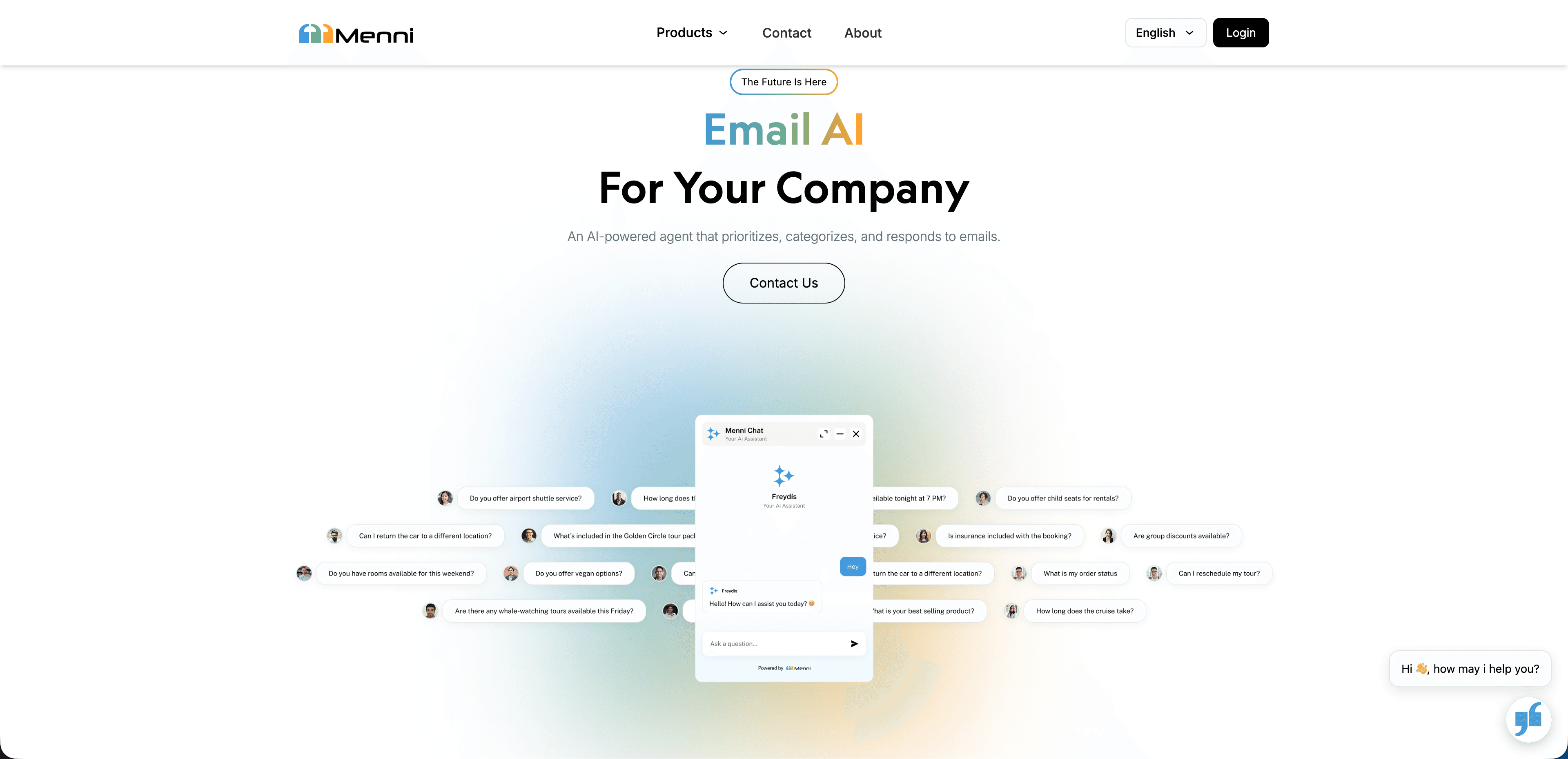
Challenges and solutions
Automating an inbox you cannot let AI send from
The challengeMost support mail is routine, but a few messages are delicate, and the wrong automated reply to the wrong customer is a real problem. That risk is why most teams never switch email automation on at all.
What we shippedWe made the agent draft-first by design. It writes the reply and saves it into the thread instead of sending it. A team member reviews, edits if needed, and hits send. Automation does the work, the human keeps the authority, and the feature becomes safe enough to actually turn on.
Sorting a queue where everything looks equally urgent
The challengeRoutine questions, angry customers and time-critical booking changes all land in the same undifferentiated list. Teams spend their day sorting, and the messages that genuinely need judgement get buried by the ones that do not.
What we shippedThe agent classifies every incoming email against the client's own rules for priority, topic and intent. The inbox organises itself as mail arrives, so the queue reflects what actually matters rather than what happened to arrive last.
Drafting replies that match real policy
The challengeA drafted reply that sounds right but contradicts the company's actual terms is worse than a blank one, because it takes longer to catch than to write from scratch.
What we shippedDrafts are generated from the company's own knowledge base, so they are grounded in real policies and content. The reviewer is editing a reply that already reflects how the business works, not fact-checking a guess.
Working inside the tools the team already uses
The challengeSupport teams will not move their email into a new interface for an AI feature, and asking them to would have killed adoption before it started.
What we shippedEach client connects their Microsoft Outlook mailbox over OAuth through the Graph API. The agent picks up new mail the moment it arrives and leaves its drafts in the same threads the team already works in. Nothing about the team's daily habits has to change.
Before and after
- BeforeA single undifferentiated queue of incoming mailAfterEvery email sorted by priority, topic and intent on arrival
- BeforeStaff re-typing the same answers all dayAfterA grounded draft already waiting in the thread
- BeforeAutomation avoided because AI sending is too riskyAfterAutomation switched on, with a human approving every send
- BeforeSensitive messages lost in the noiseAfterEdge cases routed to the person equipped to handle them
Why draft-first was the right call
It would have been easier to let the agent send automatically. We deliberately did not.
The draft-first model is what makes Email AI safe to switch on. It cuts reply time sharply while guaranteeing that a human signs off on every customer message. That trade, speed with oversight, is exactly what support teams need before they will trust automation anywhere near their inbox, and it is why this is the agent that proves automation and human control are not mutually exclusive.
Anything the agent should not answer at all is routed onward to the right team or staff member, so the edge cases land with the people equipped to handle them rather than sitting in a draft nobody owns.
Email AI turns a chaotic shared inbox into a sorted, mostly-drafted queue. The team stops triaging and re-typing routine answers, response times drop sharply, and every send still passes through a person, so the business gets the efficiency of automation without surrendering control of its voice.
Technology stack
Part of the Menni.ai platform
Email AI is one of three AI agents we built for Menni.ai.
Want automation your team will actually switch on?
The reason most inbox AI never ships is trust, not capability. We design the human back into the loop so the efficiency is real and the risk is not. Tell us about your queue.